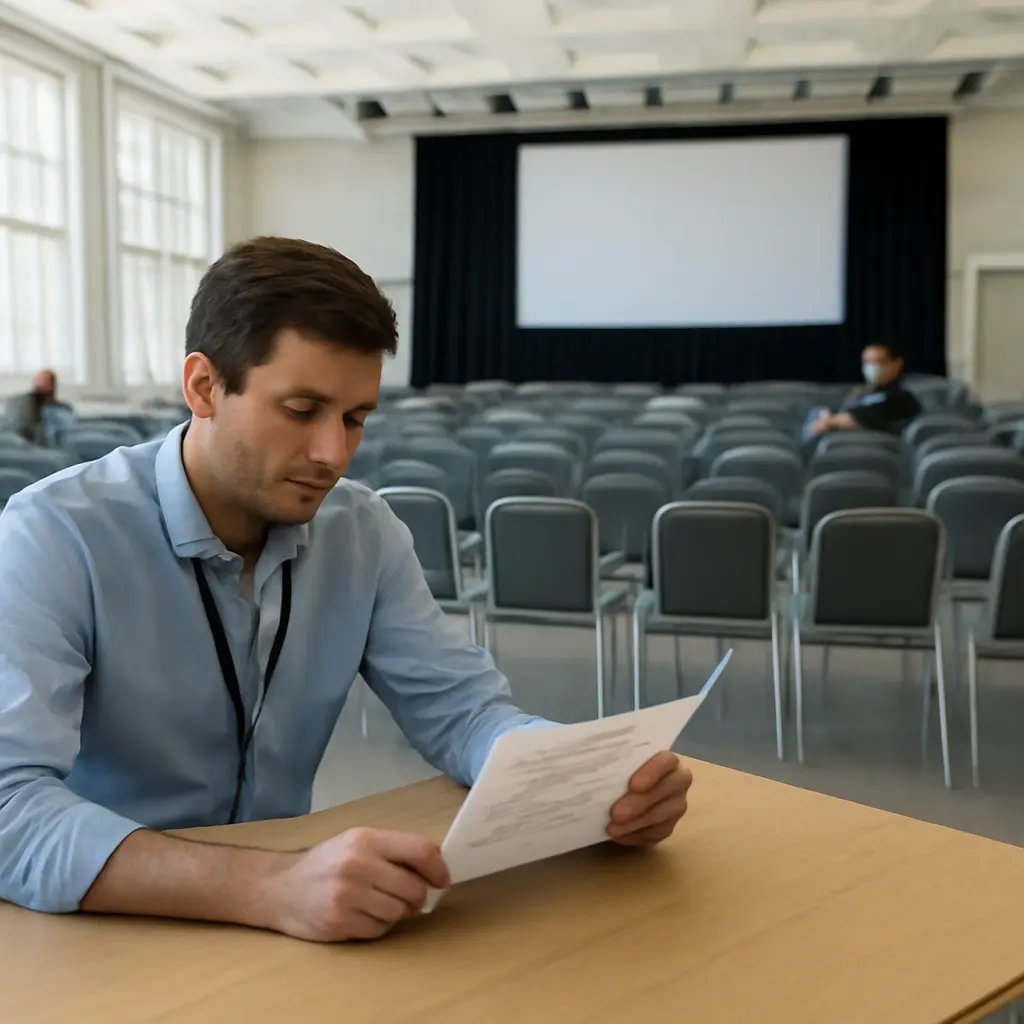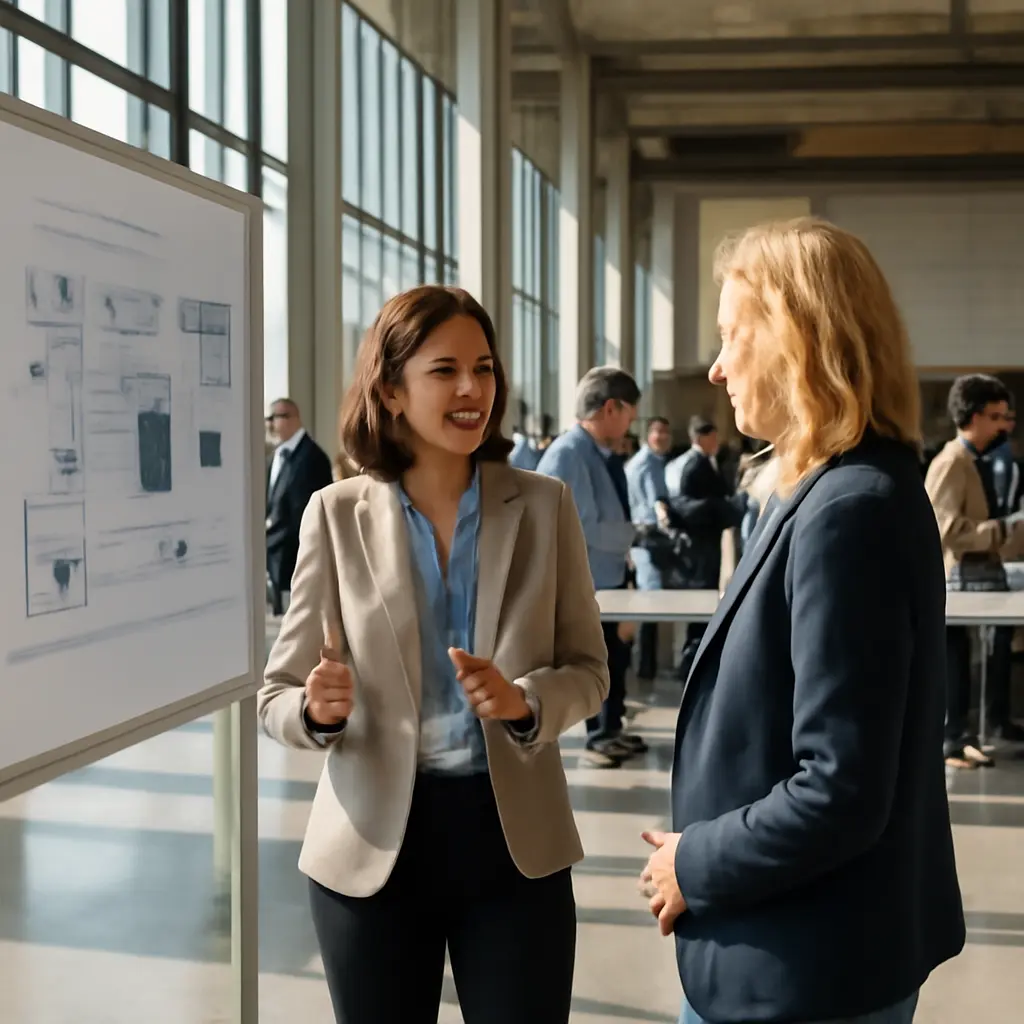
For women engineers, conference season is about more than free swag: it is a chance to build professional networks, find mentors and sponsors, develop technical skills, and make their work visible in a field where women remain underrepresented. The National Science Foundation reports that women made up about 16% of the U.S. engineering workforce in 2021. Conferences cannot solve structural barriers on their own, but research on mentoring, networking, and workplace inclusion helps explain why a well-chosen event—and a plan for using it—can matter.
Conferences expand women engineers’ professional networks
A professional network is the set of relationships through which people exchange information, advice, referrals, and opportunities. For an engineer, conference networking can include meeting peers, approaching recruiters, joining technical communities, and reconnecting with colleagues outside the immediate workplace. These are distinct forms of networking, but together they can make expertise and opportunities easier to find.
The National Center for Science and Engineering Statistics’ 2023 report on women, minorities, and persons with disabilities in science and engineering found that women held 16% of engineering jobs in 2021, compared with 29% of science and engineering jobs overall. That gap makes access to professional communities especially relevant: conferences can create cross-company connections that may be harder to develop in a workplace where women are a small minority.
Peer networks and technical communities
Peer networking means building relationships with people at similar career stages or working on related technical problems. It can lead to informal knowledge-sharing, collaboration, referrals, and a sense of belonging. Society of Women Engineers (SWE) events, for example, bring together engineers and engineering students for technical sessions and community-building. A practical conference goal is to leave with a few meaningful contacts—not simply a large stack of business cards.
Recruiters and career opportunities
Career networking connects attendees with employers, hiring teams, and professional associations. A conference conversation may help an engineer understand a role, learn what skills a company values, or identify a useful follow-up contact. For job seekers, preparing a concise introduction and a specific question can make these conversations more productive. For employers, visible participation also offers a chance to demonstrate whether inclusion is reflected in their practices—not only in recruitment language.
Conferences support women engineers’ mentorship and sponsorship
Mentorship is a developmental relationship in which a more experienced person offers guidance, feedback, or perspective. Sponsorship is different: a sponsor uses influence to advocate for someone’s advancement, such as recommending them for a high-visibility assignment. Conference programs can help attendees meet potential mentors and learn how sponsorship works, although a single introduction is usually the beginning of a relationship rather than a guarantee of ongoing support.
The National Academies of Sciences, Engineering, and Medicine’s 2020 report, Promising Practices for Addressing the Underrepresentation of Women in Science, Engineering, and Medicine, reviews evidence and institutional approaches aimed at improving women’s participation and advancement. Its broader lesson is that representation and retention depend on workplace and institutional conditions, not individual effort alone. Conferences are most useful when their connections are followed by sustained mentoring, fair access to opportunities, and organizational accountability.
Finding mentors across career stages
A conference mentor may be a senior engineer, technical leader, researcher, or fellow attendee with experience relevant to a particular challenge. Structured mentoring sessions can lower the barrier to making an introduction, while informal conversations may reveal shared interests. Attendees can make the most of these meetings by asking focused questions—about a career transition, a technical specialty, or navigating a particular workplace situation—and by agreeing on a realistic next step.
Recognizing sponsorship and advocacy
Sponsorship involves active advocacy, not just advice. A sponsor might put someone forward for a promotion, recommend them to lead a project, or make sure decision-makers know their contributions. Conference discussions about sponsorship can help engineers identify the difference between encouragement and concrete advocacy. They can also prompt employers and professional organizations to make nomination, awards, speaking, and leadership opportunities more transparent.
Conferences build women engineers’ skills and visibility
Professional development is the ongoing process of strengthening technical knowledge, communication, and leadership abilities. Conferences support it through technical talks, workshops, demonstrations, and conversations with practitioners. Visibility is related but distinct: it means that an engineer’s expertise and contributions are seen and recognized. When women present research, lead sessions, or join technical panels, they can share knowledge while making their work more discoverable.
The U.S. Bureau of Labor Statistics projected 7% employment growth for architecture and engineering occupations from 2023 to 2033, faster than the 4% average projected for all occupations. That broad forecast does not guarantee opportunities in any particular engineering specialty, but it underscores the value of keeping skills current as technologies and labor needs change.
Technical learning and continuing education
Technical conference learning can include sessions on emerging tools, standards, research, and industry applications. Attendees can use an agenda to select sessions that address a specific skill gap or work challenge, then share useful takeaways with colleagues afterward. Because conference quality and content vary, engineers should check whether a session’s level, subject matter, and format match their goals before investing time or travel funds.
Speaking, publishing, and professional visibility
Presenting a project, paper, or case study is a form of professional visibility that also contributes to the field’s shared knowledge. Speaking can help an engineer practice explaining complex work to different audiences and connect with people interested in the same subject. Conference organizers can support broader participation by using transparent speaker selection, accessible submission processes, and balanced programs that do not rely on the same small group of visible experts.
Making conference season work for women engineers
A conference’s value depends not just on its schedule but on whether attendees can participate meaningfully. Cost, travel, caregiving responsibilities, accessibility, and workplace approval can all affect who is able to attend. The National Academies’ review emphasizes the importance of institutional practices in shaping participation and advancement; that perspective applies to conference access too. Employers and event organizers can help by providing clear funding policies, accessible venues, inclusive codes of conduct, and practical support for attendees.
Plan for value before, during, and after the event
A simple plan makes it easier to turn attendance into lasting professional value:
- Before the event, choose a technical or career goal, review the agenda, and identify people or organizations you hope to learn from.
- During the event, attend selected sessions, ask specific questions, and make introductions that feel relevant rather than treating networking as a numbers game.
- After the event, follow up with a brief message, share useful resources, and schedule any promised conversation while the context is still fresh.
For example, an engineer seeking to move into systems leadership might attend a technical workshop, speak with a panelist about the transition, and follow up with a focused question about recommended experience. The value comes from linking learning, relationship-building, and a realistic next step—not from the swag bag.
Conclusion: Conference season is an investment in women engineers
Conferences can widen women engineers’ networks, create openings for mentorship and sponsorship, strengthen technical and leadership skills, and increase the visibility of their work. Those benefits matter in a U.S. engineering workforce where women remain underrepresented. Yet conferences are one part of a larger picture: lasting progress also requires inclusive workplaces, equitable access to opportunity, and sustained support after the event ends.
Engineers can start by choosing an event with a clear purpose, setting a few achievable goals, and following up with the people and ideas that prove useful. Employers and organizers can make that effort more equitable by funding participation and designing welcoming, accessible programs. The free swag may be a perk; the relationships, knowledge, and opportunities are the point.
Sources: National Center for Science and Engineering Statistics, Women, Minorities, and Persons with Disabilities in Science and Engineering: 2023, https://ncses.nsf.gov/pubs/nsf23315; National Academies of Sciences, Engineering, and Medicine, Promising Practices for Addressing the Underrepresentation of Women in Science, Engineering, and Medicine, 2020, https://doi.org/10.17226/25585; Society of Women Engineers, Annual Conference, https://swe.org/events/annual-conference/; U.S. Bureau of Labor Statistics, Occupational Outlook Handbook: Architecture and Engineering Occupations, https://www.bls.gov/ooh/architecture-and-engineering/.